about us
Jumilla’s extraordinary vine-growing legacy
ARID EARTH OFFERING UP BEGUILING FLAVOURS
We are an ancient wine-growing region with diverse microclimates and landscapes, and altitudes reaching up to 1,000m. Our identity is forged by our emblematic grape, Monastrell, which miraculously thrives in near-desert like conditions to produce wines with vibrant fruit flavour and beguiling aromas reminiscent of the wild flowers growing in the nearby hills.

A 2,500 year-old history of vines
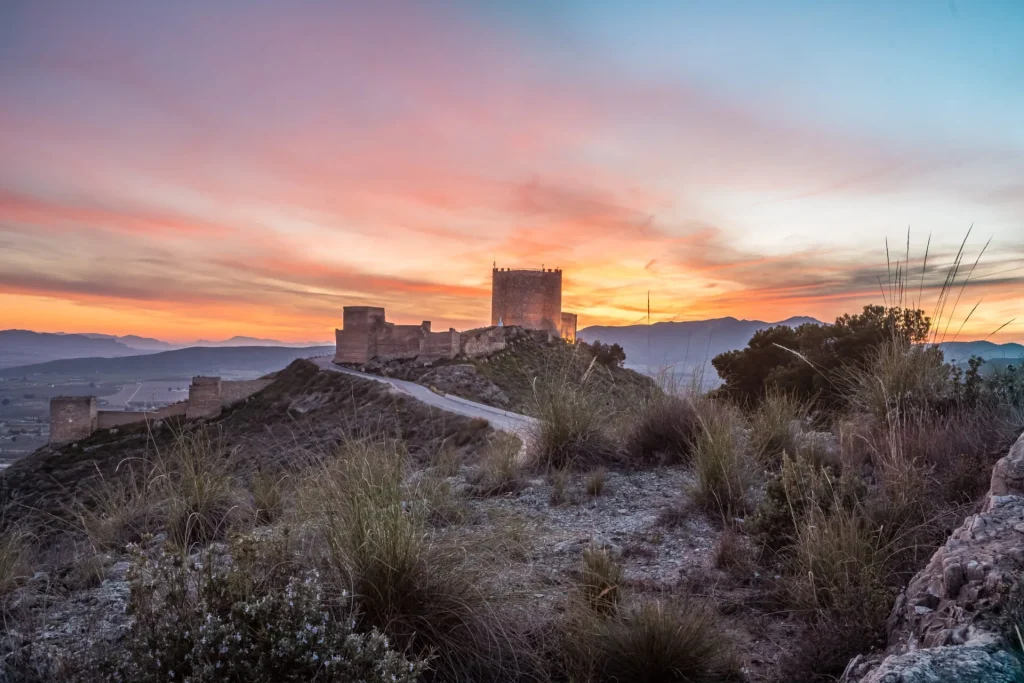
Situated in the south-east of Spain, the Jumilla wine region stretches across two of Spain’s southern provinces: Castilla-La Mancha, in which nearly 60% of the vines are planted, and Murcia. Covering a total of about 20,000 hectares (about 49,000 acres), the appellation is similar in size to Ribera del Duero.
Steeped in history and tradition, Jumilla vine-growing dates back over 2,500 years, as evidenced by recently discovered archaeological remains. Among the discoveries was an item of incalculable value -a pair of 4th century BC earrings crafted in the shape of grape bunches.
The official Jumilla DOP (Protected Designation of Origin), one of the oldest in Spain, was set up in 1966.
The Jumilla Wine Council
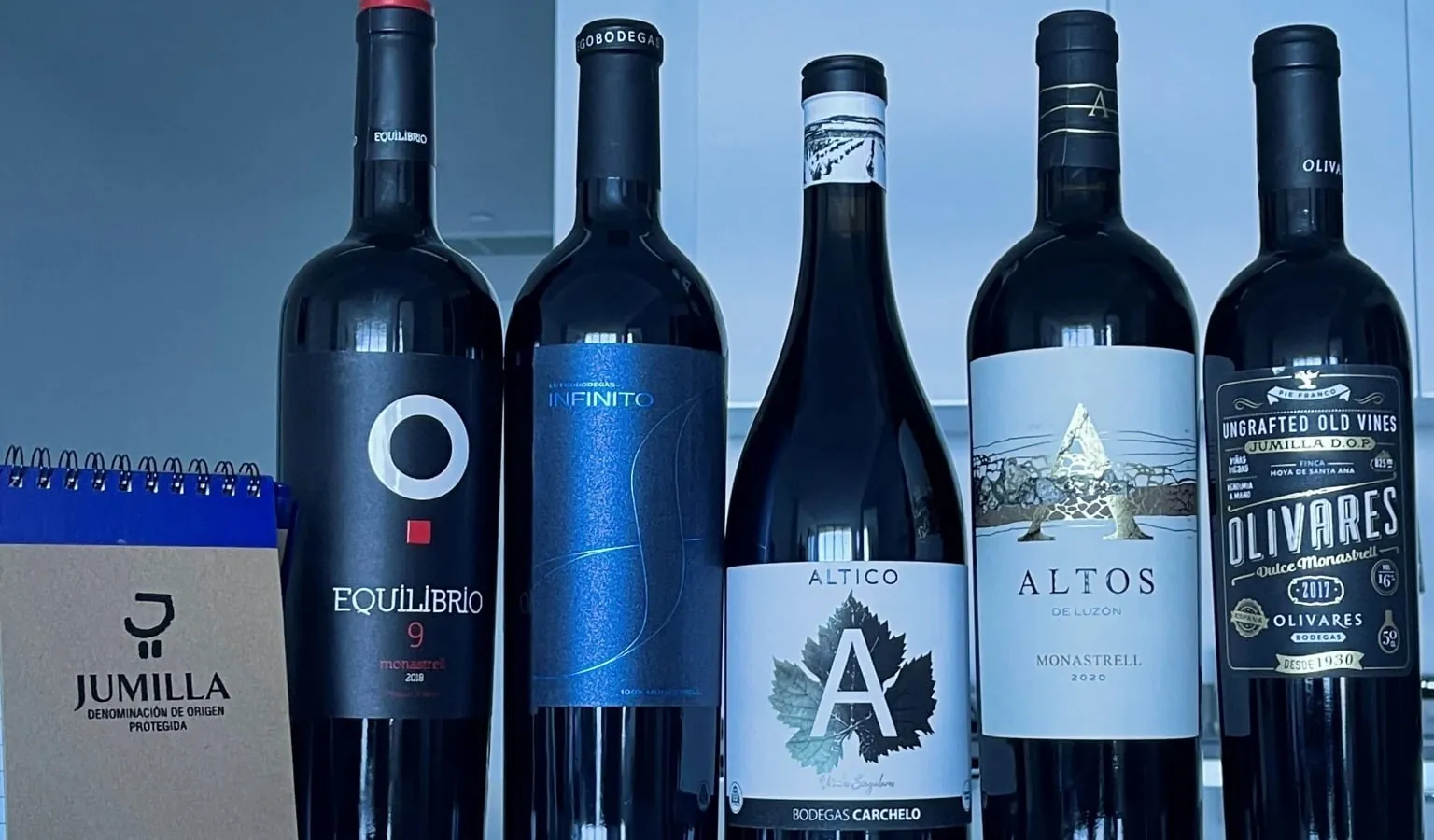
The Consejo Regulador DOP Jumilla (Jumilla Wine Council) is the official body that administers the appellation’s rules and regulations, supervises its vine-growers, wineries and cooperatives and helps promote their wines. All the wineries registered in the Jumilla appellation must meet the strict conditions set out by the body, while the wines produced must fulfil stringent criteria of origin and quality in order to carry the DOP Jumilla label on their bottle.

Jumilla facts and figures
The Jumilla Protected Designation of Origin has 20,000 hectares registered, spread across the municipalities of Jumilla, Fuente-Álamo, Montealegre del Castillo, Tobarra, Hellín, Ontur and Albatana. It brings together 1,400 winegrowers and has 38 certified wineries.
20,000
HECTARES OF VINEYARD
1,400
WINEGROWERS
38
CERTIFIED WINERIES
18,700,000
BOTTLES SOLD (2024/25)
Vineyard surface area
The vineyard area registered in the DOP Jumilla in 2025 is shown by municipality, totalling approximately 20,000 hectares of vines. About 95% is planted with red grape varieties and 5% with white, and 70% of the total is Monastrell, the DOP’s signature grape.
About 42% is located within the municipal boundaries of Jumilla, while the remaining 58% is spread across municipalities in the province of Albacete.

- Albatana: 393 ha
- Fuente-Álamo: 3,007 ha
- Hellín: 1,103 ha
- Jumilla: 8,494 ha
- Montealegre del Castillo: 4,613 ha
- Ontur: 748 ha
- Tobarra: 1,973 ha
- Total: 20,332 ha
41%
Domestic
59%
International
Sales distribution
In the 2024/2025 campaign, a total of 18.7 million bottles were sold, 41% in the domestic market and 59% in exports. The main export markets were:
- United States: 2 million bottles
- Canada: 1.6 million bottles
- Germany: 1.5 million bottles
- United Kingdom: 840,000 bottles
- Japan: 570,000 bottles
SUSTAINABILITY
Practising organic vine-growing is almost second nature to Jumilla growers. As one of the driest wine regions in Spain (less than 300mm a year), Jumilla is largely spared the fungal diseases that threaten the vines in many rainier appellations. Spray treatments are seldom necessary if at all, and eco-friendly practices are widespread.
The general move towards pesticide and herbicide use introduced a generation ago never really got off the ground in Jumilla, since its growers could manage perfectly well with their traditional time-honoured methods. By the time the use of chemicals had been discouraged, it seemed unnecessary for Jumilla producers to suddenly promote their wines as organic, since that was what they’d always been.
Today, in order to send a clear message to consumers of their wines, a large proportion of Jumilla wineries have gained organic certification for their products and advertise this on their labels. Currently, over half of the wines produced in Jumilla have organic certification, while 80% of its wineries sell at least a proportion of organically-certified wines. A growing number of wineries only sell organically-certified wines. In 2018, some 10 million bottles of these wines (a third of the total production) were produced in the Jumilla appellation.
These figures however don’t totally reflect the extent of organic production in the region, since many growers practise organic viticulture without ever having applied for certification. It is estimated that 75% of the Jumilla appellation practises organic growing, and this figure reaches 100% in the municipality of Jumilla, in Murcia province.
In sending this clear message to international markets, Jumilla has responded dynamically to the demands of such countries as Germany, the UK, the United States and Canada, where the demand for eco-friendly wine is constantly increasing. Jumilla has thus fast become one of the leading producers of certified organic wine in Spain.
Discover the wine making region of Jumilla
WINE PROFILES
discover more about jumilla wines

TERROIR
DISCOVER AN EXCEPTIONAL VINE-GROWING LAND
WINEMAKING
WHERE TRADITION AND MODERNITY COME TOGETHER
WINE TOURISM
WHY PEOPLE LOVE TO COME AND VISIT JUMILLA